






In part 1 of this series, we identified all of the rules of the zombie setting as well as what made former zombie movies and games great. In this section we will discuss the gameplay aspect of our masterpiece, and we will decide on how to integrate the story and the gameplay in a way that serves both equally.
This section will detail a lot of the minutia of gameplay, including how our battle system works, how damage is assessed, and lots of other tedious number crunching! Sound fun, right?! Well, part of making a good game is getting the details right, so let’s not forget to pay attention to this stuff!
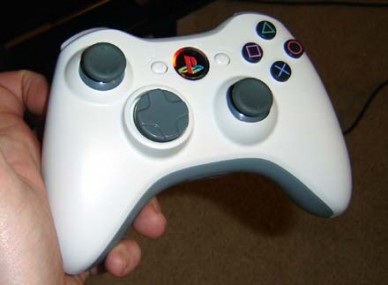
Hey, wait a minute...
BASIC GAMEPLAY: This will be a first person game. Since in part 1 we decided to create zombies that needed to have their brains destroyed to die, we basically made it a requirement that this be a first person adventure. This style of gameplay has been used so much in recent years that we get a major bonus, as well as a major negative, that we must discuss.
MAJOR BONUS: Since FPS games dominate the marketplace, we have a lot of games to base our general control scheme around. To appeal to the most people, we should stick fairly close to a Call of Duty controller set-up. There’s no need for grenades, so our bumper buttons can be used for something more creative, but the left trigger should zoom (raise gun to eye-line) and the right trigger should fire. The Y (360) or Triangle (PS3) button should change weapons and the B or Circle button should crouch and lay prone. The X or Square button should reload, and the A or X button should jump. It’s a fairly simple design, and it has become ingrained into the minds of the majority of video game players. We’ll use the right bumper (r1 on the PS3) to control a quick use item that is equipped. A quick use item can be any small melee weapon, and any pistol. The left bumper (l1 on the PS3) will be used to allow the player to drop their backpack to lose weight in case of a zombie attack. This is going to play a major role in our overall gameplay as scavenging is a major part of the game. Allowing players to quickly drop their pack will give them more speed and agility to deal with an attack, but once things are cleared they can pick the pack back up, again gaining the weight from the pack that will affect the speed of their character.
MAJOR NEGATIVE: Since so many games have perfected the FPS genre, it will draw serious criticism if our game does not perform up to standards. Also, since there are an endless parade of FPS’s on the market, some gamers are getting tired of them. It would be nice to step out of the pack, but trying to pull in too many game mechanics in order to stand out is a good way to take focus away from perfecting the things that matter most. There’s no need to try and force motion controls, or RTS mechanics, or some other gimmicky trick to be different. Let’s stick to the basics and try to make the best game possible.
PHYSICS AND DAMAGE: If the zombie’s body parts don’t react properly to being shot than I quit. Seriously, haven’t we moved past the days where NPCs act like bullet sponges until their “heath bar” reaches zero whereupon they suddenly fall down or explode? Games that still feature this style of damage system feel archaic and worthless.
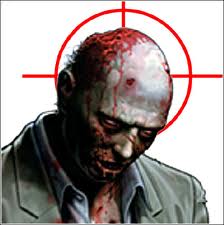
Aim for the head!
Our game is going to have an equal mix of zombie and human enemies, and each type of enemy should have a unique style of damage reaction. With the zombies, we want them to react to gun shots much like a ragdoll would. If a bullet hits them in the shoulder, they should reel back from the force of the hit, but it shouldn’t deter their progression more than a tiny, tiny bit. However, if their knee is hit, they will collapse into a crawling position. Each limb should have a limit to the damage they can receive before being severed, but the zombies will not die until their heads are destroyed. Feet and hands should act as independent limbs, meaning that a hand or foot can be destroyed without the entire arm or leg. A footless zombie would fall down, similar to the knee shot, and a handless zombie would not be able to grab onto the player.
Human NPCs should have a much more realistic reaction to gunshots. If an NPC is shot in the arm, they can no longer use that arm, making gun battles much more intense and rewarding players for precision. Running and gunning when fighting human NPCs should be a sure fire way to get yourself killed, whereas this tactic can be effective against the zombie hordes.
To my knowledge, there are no health packs that can immediately cure bullet wounds in real life, but forcing players to live in a game world where their character has to heal from wounds in a realistic manner won’t lend itself to fun gameplay either. For this reason, we need to make a compromise. Our main character will be able to carry three bandages. These bandages can be used to fully restore a body part, and the damage meter of each limb will be put together in a similar manner to the Fallout 3 system, where each limb is assigned a certain number of Hit Points that can be taken down to the point where that limb is useless (if the head or body is useless, then you’re dead!) In the beginning, the character will have no resistance to damage, meaning that even a light wound to their arm will incapacitate it. Later in the game we will introduce an armor system that can strengthen the limbs.
mmmm, thirsty.
FOOD AND WATER: This is a game about survival, and we are going to make this a driving force for both the player as well as the storyline. The main character is going to need to provide themselves, as well as their family, with enough food and water to survive. This will start out easy enough, with early missions in the game revolving around securing their home and collecting supplies there to keep them alive. But their food supplies will be dangerously low quickly, making it necessary for the main character to venture out into the world, looking to pilfer supplies from nearby, hopefully vacant houses.
A thirst and hunger meter will be visible beside the health meter on the main HUD, making it a constant concern that the player must pay attention to. Then, when speaking to his family members, a similar health/hunger/thirst bar will appear beside them, letting them know what condition those most important to them are. Early in the game, the thirst of each character will not be an issue as the home base’s plumbing still works, but as the game progresses the water will turn off, creating another level of difficulty that the player must deal with.
F/W/O/D/E RATING: Food and water is important, but there is more to surviving a zombie apocalypse than just gorging yourself. It will be necessary to collect other things as well, like weapons, medical supplies, armor, and entertainment. As the player begins to scour through the neighborhood, they will find numerous things to bring home to help their family. Bringing home items will affect the overall safety and well being of your family, and this will be represented by what the description of each item reveals.
Every item in our game will have a number, 1 – 10, assigned to each of five different meters. The five meters are FOOD (F)/ WATER (W)/ OFFENSE (O)/ DEFENSE (D) / and ENTERTAINMENT (E). A bottle of water, for instance, would have a FWODE rating like this: F=0/W=10/O=0/D=0/E=0. A Hunting Rifle would have a rating like this: F=0/W=0/O=8/D=0/E=0.
While the Food and Water meters are available on your family members when you look at them, their further meters must be reviewed in a menu (accessed by hitting a button mapped to the controller.) Each character has a FWODE rating that must be attended. It is less complicated than it sounds as simply dropping off supplies into a main chest at your home base will affect everyone’s FWODE rating. So, if you scavenge a bottle of water and then deliver it to the chest, the Water rating of everyone in the family will increase appropriately.
FOOD and WATER: These meters were covered in the section above as they are the only ones that can kill your character and this makes them much more important than the other three. Looking at the details of either of these meters in the player’s menu will show how many days worth of either food or water they have in stock.
A player can go for longer without food and survive, but their skills are dramatically affected by running out of food. On the first day, the player suffers a -10% to all stats, and each day causes an additional -10%. After 10 days, the player and their family will die. One serving of food will reverse the negative percentage of their stats by +20% until a 0% effect is reached again.
Water is much more integral to the player’s survival. Every day that a player goes without water causes a -20% to all stats, and each successive day it increases by -20%. A serving of water will change this by +10%, meaning that it takes twice as long to recover from a lack of water than it does to lose stats. Once the player’s health stat reaches -100%, they die.
The player can use any food or water that they find in the world for themselves, which gives them the full effect of the item. If a food or water item is brought back to the home base and placed in the storage chest, the effect of the item is divided among the three family members. A player and their family members each need 10 food and 10 water points per day to avoid receiving negative effects. Items from storage are depleted at the beginning of each day.
Once either food or water is depleted at the home base, the family members will begin pushing the player to focus on scavenging supplies. If any member of the family reaches -50% health, all other missions will become inactive, and the player will be forced to focus on scavenging. If any family member dies, it will trigger an end game and the player will receive the end game continuation option, which will be explained later.
OFFENSE: All weapons have an offense number that determines how much damage they can do. The damage effect of a weapon is important, but the usage of the weapon will matter far more to the player. For instance, a chainsaw might have a high offense rating, but the player might prefer using a pistol with a lower offense number in order to stay far away from the flesh eaters. It depends on the player’s preferred style of play.
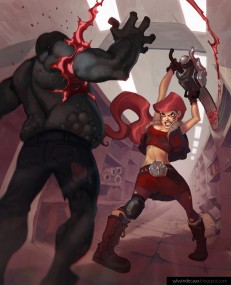
Chainsaws, effective 100% of the time!
Bringing weapons back to the home base will increase the overall offense rating of the base. This number does not decrease unless weapons are taken out of the home base storage, are traded to other NPCs for goods, or are used for creating offensive bonuses. As the offense number of the home base increases, options for new offensive weapons, attack options, and other bonuses will be unlocked. This includes creating traps in the house and around the neighborhood to start protecting your family and making the area safer. When the options become available, they will require the use of materials from various sections. For instance, it is possible to create a nail bat, but doing so will require nails, a hammer, and a baseball bat. Upon creating the item, the nails and bat will be consumed. The resulting weapon will have a higher offense rating, but if the player does not put the bat back into the base storage chest then the overall offense rating will go down by the total offense of the original bat.
The Offense rating of a weapon determines the damage multiplier the player receives when using it. Each player will have two offensive skills, ranged and melee, that determines how much damage they can inflict with that type of weapon. For instance, if a sniper rifle has a offense rating of 10, and the player’s ranged weapon damage is 100, then they will inflict 100 + 100% damage with each shot of the sniper rifle (a total of 200 damage.) The damage multiplier directly competes with the defense multiplier discussed below.
DEFENSE: This number represents the effective armor rating of anything that the player retrieves. A bullet proof vest, for instance, has a defense rating of 10, and when stored at the home base it increases the overall defense of the base by 10 points. However, this number does not transfer to the player in any way. In order to take advantage of a Defense rating, the player must equip the item. There are armor slots on the head, body, hands, legs, and feet. The highest armor rating that a player can have is 50, which will decrease all damage taken by 50%.
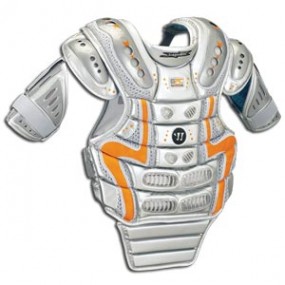
Good for Hockey, GREAT for zombie fights.
Damage is accrued by the character with two important distinctions. First, the total health rating is always affected by damage received to any part of the body. That damage can be lowered by a maximum of 50% if a player has an armor piece on each slot with a total Defense rating of 10. Second, each limb has a total health rating of 1/5th the total of the player’s health rating. In other words, if a player has a total health rating of 100, then their left hand has a total health rating of 20, their right hand has a health rating of 20, left arm has 20, right arm has 20, etc. A piece of armor can provide a large amount of protection to the associated limb, making creating good armor a big part of the game.
If a player finds a leather coat with a defense rating of 2, then their body and both arms receive an armor rating of 20, meaning that all damage received to their arms or body is reduced by 20% when talking about their limb health ratings. However, their total health rating will only receive a 10% decrease. Remember, the total health rating receives half of the effect that the limbs do. The end result of this is that a player can ensure that their limbs are 100% protected, but this will not make them invulnerable to attack. They can still die, but they no longer have to worry about receiving incapacitating damage to any particular area of the body.
Defense items are important, but they do not mean the player is invulnerable to weapons. While zombie attacks can be deflected with armor (to a maximum of 50% of total health rating damage and 100% to armored limbs), the use of a weapon is much harder to protect against. All weapons have an Offense rating, and this gives that weapon a damage multiplier. So, if a pistol has an offense rating of 4, that means the damage inflicted will be increased by 40%. If the damage is inflicted to an armored limb, let’s say to a head wearing a helmet with a defense rating of 5 (50% decrease in limb damage), then the total damage inflicted will be -10% of the total, post-adjusted damage. The defense percentage is taken into consideration AFTER the offense percentage. In other words, if a player has a ranged attack of 100, then uses a pistol with an offense rating of 4 to shoot an enemy in the head that is wearing wearing a helmet with a defense rating of 5, then we can follow the math involved to determine the amount of damage inflicted: 100 + 40% = 140 – 50% = 70. The total damage taken to the head is 70 points. However, since defense items only do half the total decreased percentage to the total health rating, the damage taken to the entire health rating is 105 (100 + 40% = 140 – 25% = 105).
Increasing the home base defense rating is an important aspect of the game. Similar to the offense rating, when a defense rating increases it opens up options to build new items and defense measures for your home. Eventually, a player will learn ways to create new armor for themselves as well as ways to secure the home base like boarding up windows, creating metal doors, automatic locks, and even video surveillance. Zombies represent a constant threat to the home base, and at the beginning of each night there will be a chance that the home base will come under attack. The total defense rating acts as a health rating, and when a zombie attack happens it depletes the total defense rating. This damage is cumulative, meaning that if a zombie attack causes 100 damage to the defense rating of the home base, than the home now has a constant -100 rating. If a player takes out all defensive items from the home storage, then the home will have a -100 rating. This means that they are completely vulnerable to a zombie attack, and their family will certainly be killed soon if something is not done.
Maintenance items exist, like wooden planks and nails, that can be found throughout the game world. These items can be used to repair damage done to the home base’s defense rating, taking away any negatives caused by zombie attack.
ENTERTAINMENT: This rating is here mainly for fun and to encourage the player to explore the game world in search of odd equipment that needs to be used in unique recipes to create new items. Similar to the defense and offense ratings, the higher the total entertainment level the more recipes become unlocked. The things that can be created using the Entertainment rating includes items to keep your child entertained, add character effects to the player, dress up the home base, and unlock unique design options. This rating does not have any negative effect, but most players will find themselves searching for unique items that they can use to make the game more fun for themselves.
CHARACTER STATS: Players will have character stats that can be increased throughout the game. These stats have tremendous effects and will alter the game greatly depending on what they choose to focus on. At the beginning of the game, the player will start out with a 1 each stat and will then be given the opportunity to distribute 10 more points. Each stat can have a maximum of 5 at the start of the game, and a maximum of 10 after level 1 (thus preventing a player from maxing out any one stat upon character creation.)
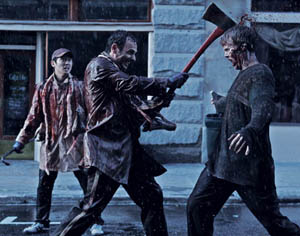
Squish.
STRENGTH: Every point of strength will add a 10% bonus to damage done with a weapon that allows a Strength multiplier. All damage inflicted by a weapon with a strength multiplier has the strength bonus added before any other increases occur. So, if a player strikes a zombie with a bat that allows the addition of a strength multiplier, the player’s Melee Damage is taken first (let’s say it is 10) and then the strength bonus is applied (let’s say the player has a Str of 5, meaning they will get a 50% bonus making the total now 15.) That number is then affected by the weapon’s offense rating (a bat has an offense rating of 4, or +40%. 15 + 40% = 21 damage.)
This stat will also determine how much weight the player can carry before their speed is affected. Since this game focuses a lot on scavenging, the ability to carry larger loads of equipment back to the home base is going to be a big factor. Every item in the game has a weight assigned to it, and a player starts the game able to carry 50 extra pounds of weight before the added weight begins to take down their total speed (explained below in the Speed section.) Every point of Strength allows a player to carry an additional 10 pounds of weight before their speed is affected.
AGILITY: Every point of agility adds a 10 point bonus to damage done with a weapon that allows an Agility multiplier. It works identically to the Strength multiplier explained above.
Agility also determines how quickly a player can move. Every point of Agility will give the player’s total Speed rating a +10% modifier. This will greatly affect how fast the player can get around as well has how quickly they can sprint.

I focused on Str and Int.
INTELLIGENCE: A smart character has easier access to upgrades of all kinds. The Home Base’s recipes for Offense, Defense, and Entertainment are made much easier to obtain when a player has a high Intelligence. For every point of Intelligence, the required total rating for any of these sections is lowered by 10%. So, if it requires a total Home Base Offense Rating of 90 to build a nail bat, and a character has an Intelligence of 5, then the required Home Base Offense Rating to make the bat is lowered down to 45 (90 – 50% = 45.)
During the game there will also be story elements that will change depending on a players Intelligence rating. For instance, if an NPC is working on a project that requires scientific or mathematical prowess, a player with a high Intelligence will be able to help them.
CONSTITUTION: This determines the player’s total health rating as well as the increase in total health rating gained each level. A player starts with a health rating of 100, and every point of Constitution raises the players health rating by 10%. This means that at the beginning of the game, all players have a health rating of 110 (since all players start with a 1 in each of their stats.) The total increase in health rating gained each level is affected in the same manner, by 10% for each point of Constitution.
A player that focuses on gaining a high Constitution early in the game will be rewarded with having a large health rating at the end of the game, making this a stat that is well worth paying attention to.
CHARISMA: This stat plays a role in every interaction with an NPC that a player has. Multiple dialogue trees will require a certain level of Charisma to access, and players with a high Charisma will begin to notice that NPCs willingly offer help without being asked to. For instance, a player with a low Charisma will never be offered free items from a discussion with an NPC, but a player with a high Charisma will find that NPC’s often offer them helpful items to take back to their home base. There will also be several unique Entertainment items that can only be found through a high Charisma.
There will be many times during the game where NPCs will approach your home base looking to trade, offering important items or information that the player needs. A high Charisma will make these trades easier and less costly. Since there is no use for money in our zombie infested world, traders will instead base their transactions on the total Offense, Defense, or Entertainment value of the items they are trading. So, if a player wants to purchase a gun from a trader, the trader might ask for a trade of 100. This number can be reached by giving them items until the total value of those items (assessed by their Offense, Defense, or Entertainment value) reaches or exceeds 100. Every point of Charisma increases the trade value of their own items by 10%. This allows the player to get a much better value when trading.
Guns and ammo are the most valuable items in the game, and each are given a 10x – 50x multiplier in any trade discussion. This means that a gun with an Offense rating of 10 would never be sold for less than 100 under any circumstance. Also, each trader will have their own ways of doing business, and most of them will require a 200% profit margin. A trader with a 200% profit margin would sell a gun with an Offense rating of 10 for no less than 200, and probably even higher.
OTHER CHARACTER STATS: Besides the basic stats, each character has other stats that are important to gameplay. These are ones that can not be adjusted by the player at any point in the game, but are rather affected by the stats that can be changed.
HEALTH RATING: A player starts with a 100 HR, and they receive a 10% bonus for each point of Constitution. So a character that starts the game with a Constitution of 5 would have an HR of 150. Each level that the player gains, their Health Rating will go up 10 points, and this number is also affected by their Constitution bonus. So, that character with a starting Constitution of 5 would receive an increase of 15 HR points upon reaching level 2, making their total HR, before adjustment, 115. Then the Constitution bonus is applied, making their total HR 173 (115 + 50% = 172.5 rounded up to 173.) Compare this to a player that chose to keep their Constitution at 1 and you will see how important this stat is (a level 2 character with a Con of 1 would have an HR of 122 [100 + 11 = 111 + 10% = 122.1 rounded down to 122]).
MELEE RATING: This number determines how much damage a player inflicts when using a melee weapon. This number starts at 10 and can be increased throughout the game with various different training techniques and items that the player finds. This number is also increased by the total Weapon Offense rating, as well as if the weapon allows for modifiers. So, let’s say a character uses a bat, with an offense rating of 4 (+40%), that allows for a Str Modifier. The character has a Str of 5, and the Str modifier is always applied before the weapon modifier (meaning the Melee Rating is now at 15 [10 + 50% = 15]). Now we take the resulting Melee Rating (15) and apply the weapon’s Offense Rating (15 + 40% = 21). This means that the player with 5 Strength will be doing 21 damage each time they strike something with this bat.

Much, much, much more effective than a bat
RANGED RATING: This number works identical to the Melee Rating except that it is applied to weapons that the player throws as well as guns. All guns in the game will have unique multipliers that drastically increase their total damage, making them by far the strongest weapons in the game, but the base level of damage starts with the Ranged Rating.
SPEED: A players total speed is measured on a scale of 1 – 100 (multipliers can cause it to exceed 100). Walking speed is 50, and running speed is 100. A player is incapacitated at 0 speed, but anything under 10 should make it nearly impossible to move around effectively. At the start of the game, all players can carry a minimum of 60 pounds (if their Str is 1) and a maximum of 100 pounds (if their Str is 5) without it affecting their speed. However, after that limit is reached, every additional pound will be subtracted, number for number, from their Speed. In other words, if a player has a Str of 5 and is carrying 110 pounds, then their total speed will be affected by -10, meaning that they walk at a rate of 40 and run at a rate of 90.
Agility plays a big part in a players total speed. Each point of agility adds a 10% increase to the player’s overall speed, this means that even at level 1, with an Agi of 1, the player will get a 10% increase. The player’s Agility bonus is applied before any negatives are assessed, meaning that the players total walking speed is 55 and total running speed is 110. Sp, using the same example as above, that would mean that the player carrying 10 pounds over their total weight allowance would have a walking speed of 45 and a running speed of 100. Since the Agility bonus is measured in percentage increases, once a player’s speed hits 0, no Agility bonuses apply.
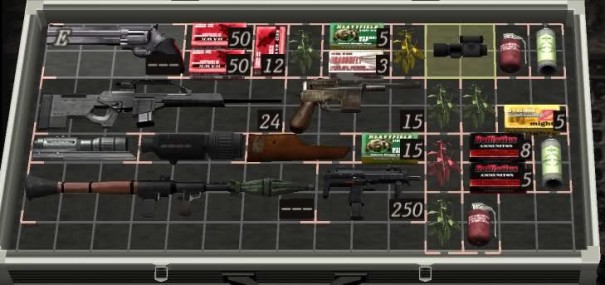
If it ain't broke...
BACKPACKS: Storage space is going to be a major part of the game. We’re going to pilfer the system used in the Resident Evil games, in which players can store items in their packs and manipulate how those items fit. However, any items equipped to the character, including weapons, will not require space in the backpack.
The left bumper (l1) button will allow a player to drop their backpack at any time, giving them the ability to move at a speed not encumbered by the pack. Players will have the ability to carry a backpack (taken from the homebase early in the game) or a large satchel, this item will be mapped to the bumper (l1) button. However, the player can also find belt satchels that can add smaller, but useful, equipment space. These satchels can not be dropped once equipped without entering a menu and dropping them.
DURABILITY: Offensive and Defensive items in the game will not only have a FWODE rating, but will also be assigned a Durability score.
Durability is scored on a 1 – 100 scale. The durability of a weapon will affect the total damage of that weapon once the score goes below 50. At that point, every point that it goes down further will count against the total damage done by the weapon. The durability factor is the last percentage that affects any damage equation. So, if after the amount of damage inflicted by a player (after all modifiers, like Strength and Offense Rating for instance) is calculated, the final change to that number will come if the weapon’s durability is below 50. At a durability of 25, a weapon will receive a -24% damage penalty. When a weapon reaches a durability of 1, it breaks and can not be repaired. Any weapon with a durability above 1 can be fixed at the home base if the proper parts have been obtained. Armor functions in a similar manner.
Every 100 points of damage inflicted by a weapon will decrease the weapon’s durability by 1 point. Every 100 points of damage inflicted upon a piece of armor will decrease it’s durability by 1. Some weapons or armor can have special durability bonuses or negatives, detailed in the item’s description.
Durability also directly affects the amount that a trader is willing to give to a player for the item. The correlation is a direct point to percentage relationship. In other words, if an item has a durability of 80, then a trader will declare that the item is worth -20% of it’s normal value.

Thanks, WoW.
FREQUENCY RATING: The final stat that all items have is a frequency rating that can help prevent players from accidentally trading away rare items or otherwise ignoring them when they come upon them in the world at large. This rating will also determine the color of the text of the item’s name. The colors go as follows: Common (white), Uncommon (Green), Rare (Blue), Unique (Orange).
This system has been used in many other games (Thanks, WoW!), and the color scheme has become expected and immediately understood by many gam players. What we want to achieve with this is avoiding frustrating players by not revealing how important a random item they find in the world is. For instance, if a player stumbles across a unique ingredient needed for an Entertainment recipe at the home base, it would be frustrating if they had no way of knowing it was so rare.
EXPERIENCE: Our character will gain experience from killing enemies, completing missions, and for every new recipe created in the home base. There are a total of 65 levels, and there will be bonuses gained for achieving different levels. Every level gained will give the player a +10 to their health rating (which will then be increased based on their Constitution.) Each odd number level reached beyond the first (3,5,7,9,etc) will give the player a point to be spent on one of their skills (Strength, Agility, Intelligence, Constitution, Charisma). Each even number level reached will give the player a 10 point bonus to either their Melee or Ranged skill.
Other, more important bonuses will be gained for every 5 levels that the player reaches. These bonuses will dramatically affect gameplay and will make the game play different every time a new game is started.
At level 5 the player will get to choose if they want a Speed multiplier of +20% or if they want a 25 point increase in their total weight allowance.
At level 10 the player will get to choose if they want to focus on stealth or fortitude. Stealth will make the player’s footsteps quieter, meaning that the range at which their movement alerts the enemies will be cut in half. Fortitude means that when a player reaches a health rating of zero they will be given a 10 point bonus and will grant them invulnerability for 3 seconds.
At level 15 the player will choose between an experience bonus and a durability bonus. The experience bonus will mean that all experience gained by the player from that point forward will get a +10% effect. The durability bonus means that all items used by the player will decrease in durability at a rate 25% lower than normal.
At level 20 the player will choose between a Silent Takedown special move and a Decapitator special move. The Silent Takedown is only effective against human enemies and must be performed from behind. The player will grasp the enemy’s head and twist it, snapping the neck. The Decapitator special move is only effective against zombies and only works when carrying a melee weapon. The Decapitator is performed by holding down the trigger for three seconds, which initiates an attack that is guaranteed to hit the zombie in the head.
At level 25 the player can choose one skill from any of the previously offered skills that they did not formerly choose.
At level 30 the player can choose a specialty in either Offense, Defense, or Entertainment. When chosen, all recipe requirements for the chosen field at the home base will be decreased by 50.
At level 35 the player can choose to become either a Survivalist or a Scavenger. The Survivalist gets an extra 100 Hit Rating and can survive without food and water for twice as long as normal. The Scavenger gives the player a new HUD map overlay that reveals all rare and uncommon items nearby with a red or orange dot.
At level 40 the player can choose a single weapon specialization. The player’s inventory at the home base as well as in their possession is revealed and the player must choose one weapon. The item chosen is then given a 100 durability that will never decrease and will from that point forward be called [player name]’s [weapon name] (Jitterbug’s Sniper Rifle, for instance).
At level 45 the player must choose between Sprinter and Leaper. A Sprinter receives a Speed multiplier of 25%. A Leaper can jump 50% higher than normal.
At level 50 the player can choose one skill from any of the previously offered skills that they did not formerly choose. However, they can not choose to pick another weapon specialization like they did at level 40.

Are you Zen?
At level 55 the player must choose between Fury and Zen. The Fury bonus allows the player to enter into a state of rage, granting invulnerability for 10 seconds. Fury has a one minute cool down. The Zen bonus allows the player to enter a state of Zen, in which they must remain still and will then regenerate 25% of their total Health Rating over the course of 10 seconds. Zen also has a ten minute cool down. Both Fury and Zen are activated by pressing down on the directional pad.
At level 60 the player must choose between Murderer and Savior. A Murderer receives a 10% bonus to all damage inflicted and all weapons decrease in durability at a rate 50% slower than normal. A Savior receives a 10% reduction in all damage taken and all armor decrease in durability at a rate 50% slower than normal.
At level 65 the player can choose to transfer all of the items they have in their home base to the home base of a new save file. This decision does not have to be made upon reaching level 65, but rather becomes an option that the player can use at any time. However, once the item are transferred, the level 65 character file is destroyed.
WALKIE TALKIE: The final thing we’ll talk about in this part of our series will be the walkie talkie that the player will carry around with them. This connects them to the home base at all times, and will turn their spouse into a valuable resource.
There will be times during the game where the walkie talkie will affect the storyline, as things will happen at the home base that the player is made aware of via the device. There will also be cases where a trader will arrive at the house while the player is away, and a call from the walkie talkie can initiate a trade even while the player is away. The walkie talkie will also be our save mechanic, allowing the player to take out the device and call back to home base to report in. This report in will act as a save game, and can only be utilized when the player is not in immediate danger and is not trying to hide. This will come in handy to create scenes in the game that increase the tension.
If a player is trying to hide from zombies or human NPCs, they will not want to pull out their walkie talkie to save the game as it will require them to speak, thus alerting the enemy. There will be several times during the game that the player will call back to the home base to tell their spouse about an upcoming situation, then they will tell them, “I’m shutting off the walkie talkie. I can’t risk being heard.” In other words, you can’t save the game in this next section!
PHEEW! That completes the second part of this series, and while there are a ton of other gameplay mechanics that would need to be discussed when creating a game, this should suffice for now. I think by reading this you can get a good sense of what sort of game we are trying to make. There are a lot of RPG elements borrowed from games like Fallout 3, but there is a focus on action that rivals that of the best FPS games on the market.
In part 3 we will discuss the structure of our game’s story and bring this series to a close with a bang!

Pingback: Designing the Perfect Zombie Video Game part 1 | Talkingship - Beer, Movies, Music, and Video Games()